Monday, February 14, 2011

Love Lost (& found)


An occupational hazard of my profession is that given the number of prints we show, store, etc., - things go missing. It's not like a painting gallery where an artist might drop off a dozen paintings for a show. We literally deal in hundreds of images and prints. Some are consigned, some are owned, others get dropped off and never picked up.

There's a slightly different story regarding the picture above, however. Many years ago, I was browsing in the Museum of Modern Art's bookstore and came across a french book on motion in photography with this Muybridge of a couple dancing on the cover. Muybridge is best known for his studies of animals in motion. (He was the person who proved that a horse's four legs do all leave the ground at once but not as previously assumed in the legs out rocking horse position. After Muybridge set up his cameras to settle a bet between two rich San Franciscans, his pictures revealed that the only time a horse's legs all leave the ground at once are when they are tucked under the body.) But I digress.

Muybridge less frequently photographed the human body in motion, but I found this image particularly pleasing and very romantic. So I set out to try and buy a print. Calls to all the Muybridge specialists proved fruitless. Trips to galleries and art fairs yielded no leads. Then one day about six years ago, I was at Photo L.A. and saw a booth with Muybridges. The booth owner didn't have it but thought he had seen it in another booth. That booth didn't have it but thought he had seen it in another booth. On and on this went until the last possible booth where the dealer dug into a stack of gravures and produced the image!

I brought the print back home and eventually took it to Washington D.C. for my friend David Adamson to scan so I would always have a copy and could in fact sell reproductions if I wanted to. (Being from the late 1800s there are no copyright issues.)

After leaving it there for a few months I forgot about it. I was probably busy opening Danziger Projects. And when I finally inquired about it David thought it had been returned to me. I thought I had misplaced it. Several searches at Danziger Projects and Adamson turned up nothing. I had a horrible half-memory of taking it on the train from D.C. to N.Y.C. and leaving the package on the train.

On my last trip to Adamson a week ago, I asked David if he could at least locate the scan so I could have a copy. And then he thought he might have actually seen the print in a drawer. We opened one drawer after another and again when we got to the last drawer the original print of the dancing couple reappeared! It's now back in the gallery. After what must be a at least a seven or eight year odyssey from first seeing the image in a book, clearly the only solution is to get it framed and hang it on the wall. Things that go into boxes and shelves have a way of hiding themselves!

Hope I haven't bored you with the story. But this post is my valentine to all Year in Pictures readers. Happy Valentine's Day. As I never tire of saying - "Photography is love"!


Friday, February 11, 2011

Hi and Lo


Call me superficial! I can't help admiring Lindsay Lohan's fashion sense and knack for visual theater. At this week's court appearance, the dress that Lohan wore made front page news while subliminally signaling her innocence (legally) as well as a few other things. But as far as news pictures go, it's a welcome break to see pictures as outrageously stylish as these.


Lohan is, of course, no stranger to courtroom dramatics. Her facial expressions and demeanor could fill an entire blog with every expression except contrition.


There was the previous court appearance where this message to the judge failed to go unnoticed.


But in a sign of new-found maturity, this week Lohan's message to herself was "Shhh"!


Thursday, February 10, 2011

A Matter of Time


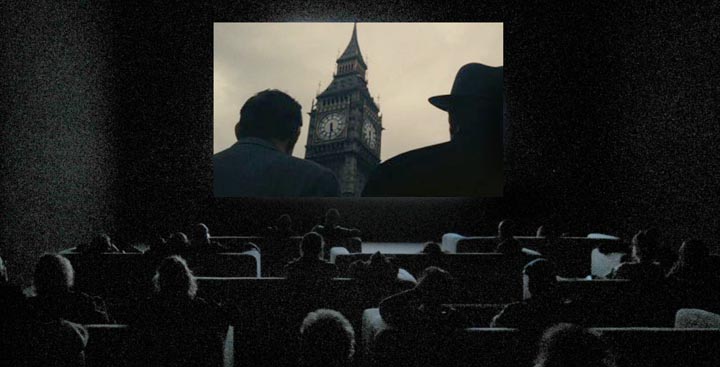
There are special moments when the art world comes together to acknowledge the impact and zeitgeist of a particular show and for New Yorkers, that moment is the current Christian Marclay exhibition at the Paula Cooper Gallery at 534 West 21st Street.

From now until Feb 19, the gallery is showing Marclay's extaordinary 24 hour video piece "The Clock" - a real time assemblage of hundreds (if not thousands) of film clips all dealing in some way with timepieces and time. In other words, if you come into the gallery at 3:04 p.m., the film might be showing a sequence in which, say, Cary Grant will be looking at his watch and it will say 3:04. Ten minutes later, a clip from a german expressionist film of the 30s might have a clock in the background where the time will be 3:14. It might be better explained in the video below.

If you have any opportunity to see this piece, I highly recommend it. You can, of course, dip in and out as you wish. The gallery has an enormous screening room full of very comfortable chairs and couches and the most surprising thing is how entertaining and gripping the work is. Most significantly, this weekend and next (the last two weekends of the show) the gallery will be open from Friday until Sunday 10 a.m. in order to allow the hardiest souls to watch the entire 24 hour cycle.

You can read some background here. And for those outside of New York, it's probably only a matter of time (no pun intended) until "The Clock" comes to a museum near you.


Wednesday, February 9, 2011


Saturday, February 5, 2011

Stone Nudes


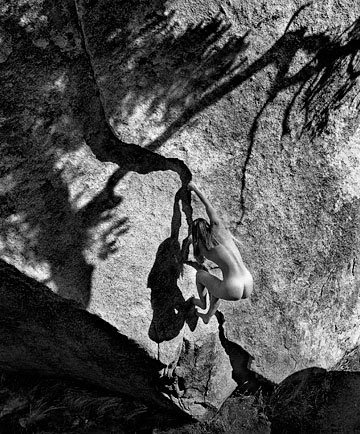
One of the many qualities of Bruce Weber is his generosity towards other photographers. As an enthusiast, collector, and publisher, Weber has brought a number of lesser known photographers to light, mostly through his self-published magazine "All-American" - now in its 10th volume.

In the most recent issue of "All-American" Weber has included a portfolio of photographs by Dean Fidelman which combine the schools of climbing photographs and the nude in a skilled and original way. I particularly like how unsalacious these pictures are. They're more about athleticism and have a kind of hippy/back to nature vibe linking them to the "Stone Master" photographers of the 70s.

My friend Tom Adler, another great discoverer of photographers, recently put together a terrific book on the Stone Masters which I somehow missed blogging about, but you can get it here.

Below: a few more pictures by Fidelman,


Tuesday, February 1, 2011

Kenneth O'Halloran


Another picture which stopped me in my tracks. This photograph from Kenneth O' Halloran's "Fair Trade" series (on Irish Fairs) is a stunner! I love its Heironymous Boschian composition, its dabs of color, and the way your eye is pulled back into the ever denser concentration of horses and figures at the back of the frame.

It's atypical of the rest of the series' Sanderesque portraits, but those are pretty strong too as you'll see below. I'm beginning to feel that the Sander to Sartorialist composed portrait is becoming almost too prevalent these days but what's interesting to see is how in the hands of someone with a distinctive vision, it still has some kick. But I'd love to see O'Halloran try to come up with more pictures like the top one.


Sunday, January 23, 2011

Football Ads


Thursday, January 20, 2011

671 and counting


Wednesday, January 19, 2011

Milton Rogovin 1910 - 2011


Milton Rogovin passed away this week at the surprising age of 101. I was lucky enough to represent Milton and put on two shows of his work and over the last few years I wrote about him a number of times on this blog. Re-reading what I wrote, I hope that much of it bears repeating.

"Sometimes life gets in the way of the art. This is one of the few plausible explanations of why Milton Rogovin is not more widely know or celebrated than he is. I have been lucky enough to represent Milton’s work for the last few years and I hope you’ll check out all the pictures on the Danziger Projects website. (Click here to view.) Hopefully you’ll see why he’s such a photographer’s photographer – a particular favorite of Alec Soth and Tanyth Berkeley amongst many others.

Rogovin’s pictures consist almost entirely of portraits of workers and the working class. His prints are nearly all a modest 8 x 10 inches – a size that suits his commitment to activism above art world recognition and his dedication to social issues, most notably the plight of the miners around the world; the decline of the American steel industry, and the struggle of the working people of his home town of Buffalo, New York.

Deceptively straightforward, Rogovin’s photographs reveal a personal style that up-ends the usual balance between a great photographer and the subject. While most masters of photography wittingly dominate the picture, in Rogovin's work the subject commands equal strength. The photographic style is deadpan. The camera simply provides a stage for his subjects to present themselves as they see fit. Rogovin trusts them and their ability to present themselves as the unique individuals they are. Whether because of his respect and empathy for his sitters or the sincerity of his humanism and politics, this seemingly simple concept re-addresses the delicate balance of power between the observer and the observed.

My favorite example of this is his 1973 picture of Lower West Siders Johnny Lee Wines and Zeke Johnson. "It's a picture of pure happiness" said one viewer. So to spread the feeling, here are some unpublished and unseen shots of Johnny from that day."


Saturday, January 15, 2011

Morning Light


Long Meadow North. 2005. Photograph by Joseph O. Holmes.


Jan 17, according to a recent study, has been deemed the "most depressing day of the year". This finding by social psychologists was made by calculating how long it takes for us to break our New Year's resolutions, for the holiday bills to pile up, and the effect of the weather and the dark. Not surprisingly, January is also considered the most depressing month and according to my own highly unscientific study, this January in particular is dragging along at a much slower pace than most Januaries.

There are, however, a few metaphorical (as well as actual) bright clouds and one of them for me is walking my dog in the morning when Central Park is still blanketed with white snow and before the dirt of the city turns everything to grey slush. I try to time my walk so that I get into the park just as the sun is rising and this week with its pale blue morning skies and golden red sunrises has been particularly beautiful.

Add to this that after 11 years our semi-wild collie/lab/sheperd/chow mix has finally mellowed enough to be let off the leash and not take off for parts unknown and you get a morning walk that is at once serene, invigorating, and joyful. There's nothing quite like seeing a happy dog bounding through snow!

Another bright cloud is seeing a good show by a friend and I finally got the chance this week to catch up with Joseph Holmes current exhibition “The Urban Wilderness” at the Jen Bekman gallery in Soho. It’s up until January 23 so there’s still time to catch it.

Joe’s pictures were taken in Brooklyn’s Prospect Park, not Central Park, but they convey the same magical feeling of the urban metropolis transformed into a wintery Eden. And they’re nearly all about dog walking! (As well as about light, and color, and composition.) Joe values may be old-fashioned – he’s someone looking to find the sublime or the memorable in the everyday – but his pictures have a nice contemporary feel due to their color and scale. And the show is a sure cure for those January blues!


Above and below from the current show:


Nethermead


And two brand new photographs from this December:


Long Meadow North No. 2


The White Oaks.


Wednesday, January 5, 2011

A Cautionary Tale


Recently sent to me, this picture posted by Russell Brand on his Twitter page shows his wife, Katy Perry, waking up without a scrap of make-up. As you can see below, this is not Ms. Perry usual look. Apparently, she was less than pleased with the posting, as it was quickly deleted from Russell's Twitter page. But as most of us hopefully know, the internet is an unforgiving environment. Once posted, never forgotten.


Friday, December 31, 2010

The 2010 Top Ten list


What is December 31 without a top ten list?

It’s been an odd year. A recovery year where it seemed like there were fewer highs and lows as everyone hunkered down with fingers crossed. Photographers being the creative people they are, however, signs of life could not be kept down and so in no particular order here are my top ten visual pleasures of 2010.


1. Richard Learoyd.

Working with a self-made camera that creates highly detailed near life-size images by projecting an image directly onto photographic paper without any interposing negative – Learoyd has invigorated at least three genres at once – cameraless (or more accurately film-less) photography, portraiture, and still life.


2. Auctions.

Continuing to make inroads into what was traditionally gallery territory, the auction houses (particularly Christies and Phillips) are putting on more interesting, original, and varied sales. And for the astute collector there are always bargains. This Irving Penn self-portrait from 1948 went for what I’m sure will be seen as a buy at $45,000 at Christies in London this past spring. I'd say it's worth at least double.


3. Mickalene Thomas.

The connections between contemporary art and traditional photography continue to intertwine as seen here in Mickalene Thomas’ bad-ass tribute to Seydou Keita. Jumping between painting, appliqué, and photography, Mickalene Thomas is just one of the new breed of hyphenates making waves as the art and photography world continue to grow closer together.


4. Susan Derges.

After a relatively quiet period, Susan Derges – one of the fab four of British camera-less photography – has re-emerged with a series of new photograms based around the idea of rock pools. In this image, Jackson Pollock meets Turner as light, color, and line intersect in a glorious mixture of fresh photographic ideas.


5. Tokyo Photo.

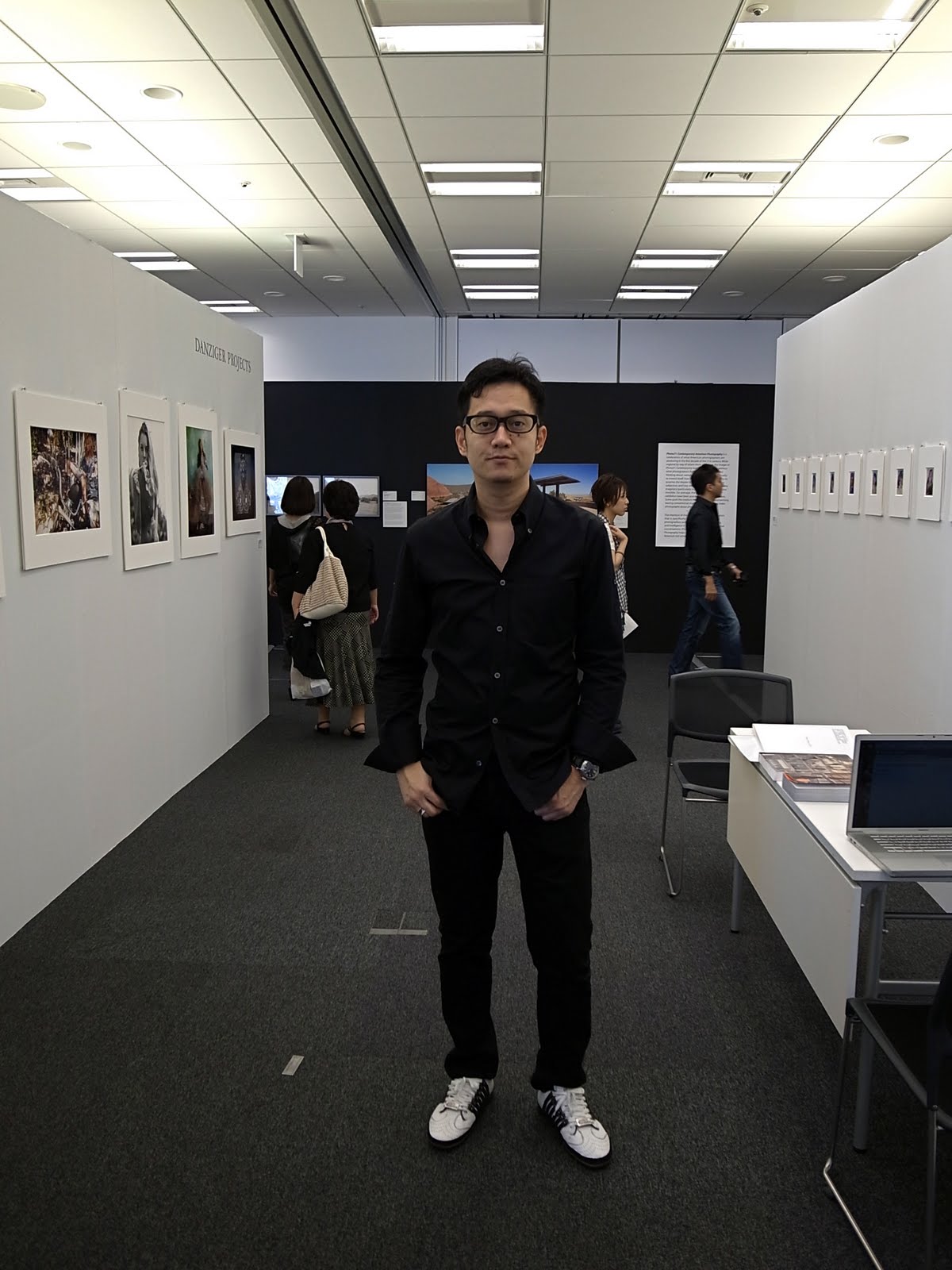
Gaining strength and energy – Tokyo Photo is fast emerging as the go-to fair of the east. Founder Tomo Harada, pictured above, has made it his mission to make the event a must see and entering year three the mix of American and Japanese dealers is creating an ever more exciting cultural exchange.


6. Patrick Smith.

Top of the list of new(ish) names that have emerged in photography this year is French photographer Patrick Smith. While clearly working in the tradition of Vitali and Niedermayr, Smith’s pictorial eye and immaculate exposures have a purity all their own.


7. Surprises.

No matter how much you think you know about photography, there are always surprises. Going through Art Miami I came across a group of pictures of Elizabeth Taylor by Frank Worth. I don’t know how I had never seen or heard of these images before but that is what makes life so interesting. (And boy, was she a beauty!)


8. Bruce Weber.

One of the best museum shows around (and up through February 13), Bruce Weber’s photographs of the residents of Miami’s “Little Haiti” neighborhood at The Museum of Contemporary Art in Miami are a reflection of Weber’s outstanding skill and diversity. To those who only think of Weber as a fashion photographer, the work may be a surprise, but to any one who has followed his career closely, the humanism and warmth of the work should come only as a welcome treat.


9. Jim Krantz.

One of the few disappointments of this gallery year for me was putting off a show of Jin Krantz’s work when we couldn’t get the releases we needed. Krantz is probably the most distinguished of the Marlboro photographers whose work was appropriated by Richard Prince for his “Cowboys” series. But Krantz is back in the saddle making new images strictly for himself of which the above image shot in 2010 is just the beginning. Stay tuned.


10. Teresa Vlckova

Noted as one of the highlights of Aperture’s latest round-up of new talent - reGeneration 2 – Teresa Vlckova creates pictures that pull us into her otherworldly universe of flying girls and Brothers Grimm-like twins. Born in 1983 in Vsetín, Czech Republic. Vlčková’s work will be seen in the U.S. for the first time in January when Aperture exhibits a selection of work of the 80 photographers featured in the book "reGeneration 2".


Saturday, December 18, 2010

Unexcused Winter Absence


Yuji Obata. Homage to Wilson A. Bentley #1. 2005 - 2006.

It has been a long time hasn’t it? That’s the problem with doing art fairs (PULSE Miami) and having a gallery. And a family, And a dog. NO TIME FOR BLOGGING!!!! Anyway, I just checked and saw that I’ve been blogging since November 2007 so bear with me. I won’t let anything really good go un-noticed.

So where were we? Michael Wolf. The answers to the question of which were Wolf’s pictures and which were other Google Earth grabs is: Michael Wolf – numbers 1, 3, 5, 6. Nobody was fooled!

Speaking of good things, my latest enthusiasm is for the work of Yuji Obata who we are now lucky enough to represent. I was introduced to Obata’s work by Yoshiko Suzuki, curator of the Tokyo Metropolitan Museum of Photography, who was kind enough to give me a rare copy of Obata’s study of winter in the Hokkaido Province titled “Winter Tale”.

Yuji Obata was born in Japan in 1962. He attended the Nihon University College of Art and currently resides in Tokyo. In 2003, Obata was compelled to photograph winter scenes in Japan as he stood in front of Pieter Bruegel's painting "The Hunters in the Snow" in Vienna's Museum of Art History. Upon returning to Japan, he traveled to the country's northernmost island, Hokkaidō, known for its cold and snowy winters. As he worked there photographing ice skaters at a middle school rink and a local speed skating team, his enchantment with images of winter deepened. Traveling around different regions of the island in winter, he began noticing the varied qualities of the snow itself, and finally became fascinated with the unique challenge of photographing snowflakes in motion as they fell from the sky.

Obata was inspired by the story and works of W.A. Bentley, an American farmer and photographer who adapted a camera and microscope to photograph a single snow crystal for the first time in 1885. Bentley went on to photograph more than 5,000 snowflakes in his lifetime, and his technique was so successful that it continues to be used today.

Like Bentley, Obata was obsessed with the challenge of doing something no one had done before – in his case photographing snowflakes in freefall rather than on a flat surface without digital or any other manipulation. It took Obata five years to achieve but his breakthrough resulted in the capture of pictures that allow the snowflakes to relate to each other in space and size, creating dynamic compositions and scenes. Obata chose to shoot the series in the mountains of Hokkaidō, based on its extreme cold and its history as the place where Dr. Ukichiro Nakaya did research that led to his invention of artificial snow. And while Obata is properly reverent to those who inspired him in this project, his photographs stand alone as fresh and original works.

I hope you enjoy them and if I don’t get around to posting again for a while I hope you'll find these pictures seasonally cheery and appropriate. Happy Holidays!


Homage to Wilson A. Bentley #4. 2005 - 2006.


Homage to Wilson A. Bentley #10. 2005 - 2006.


Homage to Wilson A. Bentley #7. 2005 - 2006.


Homage to Wilson A. Bentley #8. 2005 - 2006.


Sunday, November 21, 2010

Weekend Video


The new single and video from Antony and the Johnsons.

Weekend Video


Antony and the Johnsons performing on David Letterman.